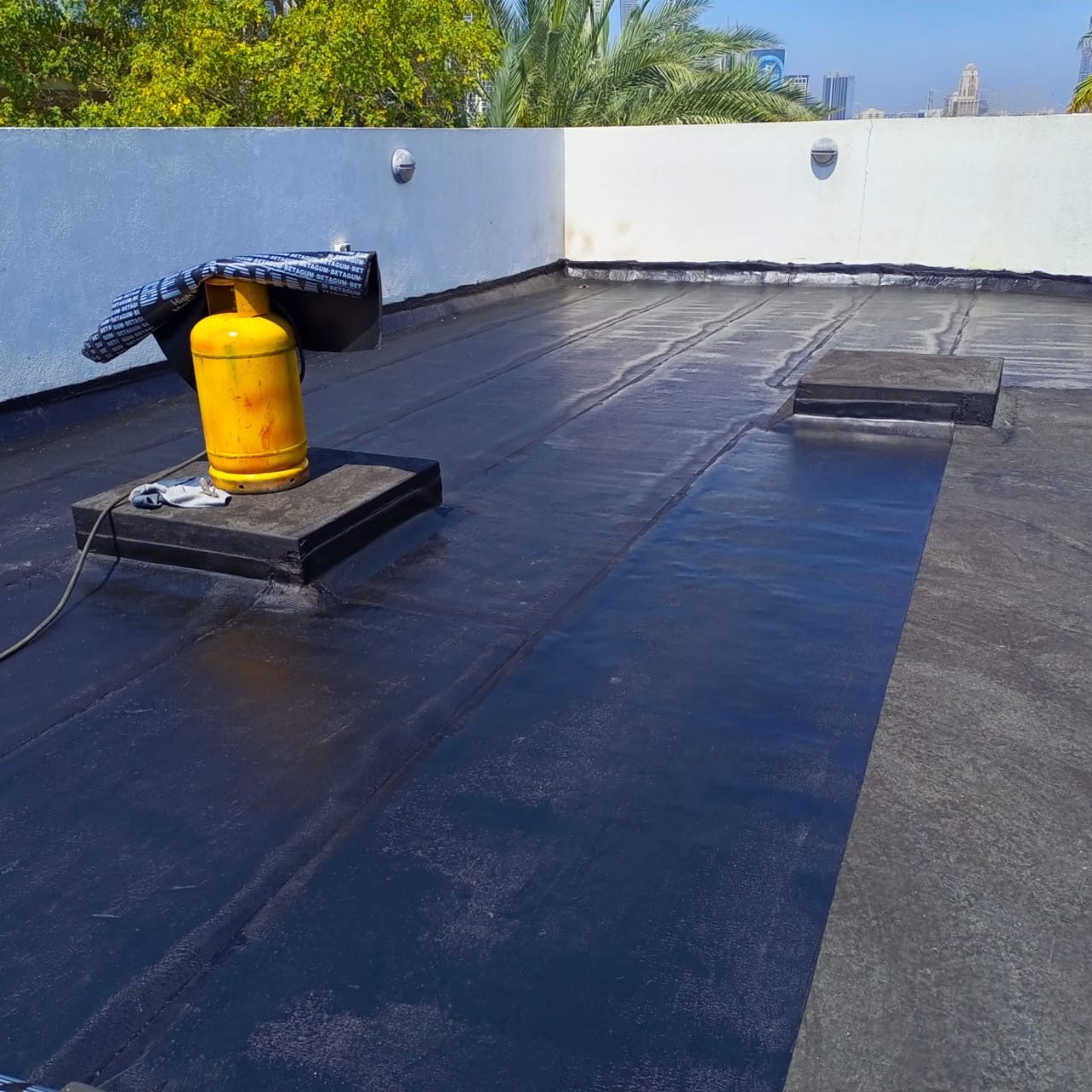
Bitumen waterproofing uses membranes of asphalt modified with polymers, torch applied in overlapping rolls, to form a continuous waterproof blanket over roofs and podiums. It is the most common roof waterproofing system in Dubai because it handles heat, tolerates structural movement and gives a long service life when the detailing is done properly.
What is a bituminous membrane?
A bituminous membrane is a factory made sheet, usually 3 to 4 millimetres thick, of bitumen modified with APP or SBS polymers on a polyester or fibreglass reinforcement. APP modified membranes handle UV and heat, which suits exposed Dubai roofs. SBS modified membranes stay more elastic, which suits roofs with movement. Mineral finished versions carry a slate surface that protects the bitumen from the sun.
How torch applied installation actually works
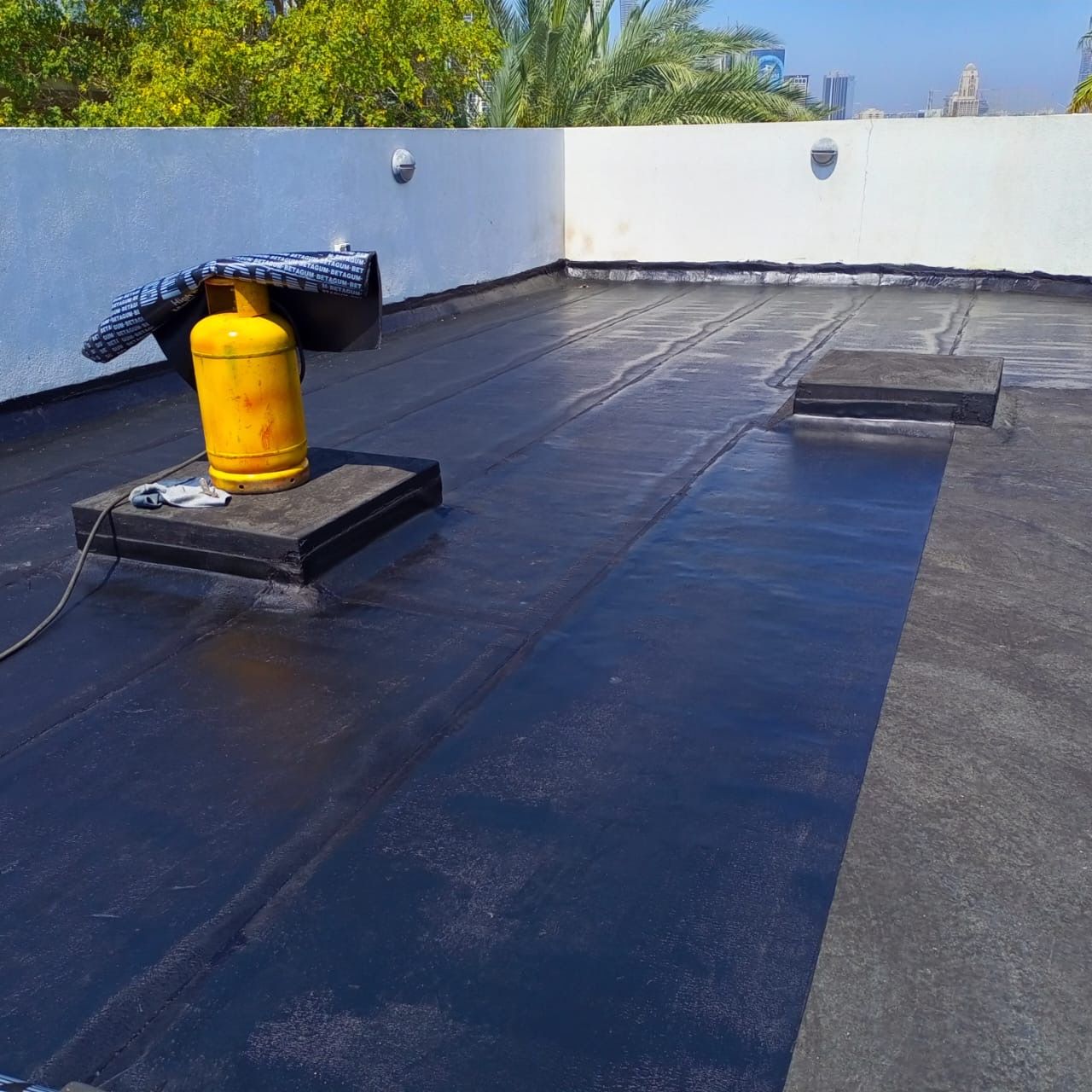
The sequence decides the outcome. The slab is cleaned and primed with a bitumen primer. Rolls are then torched: the installer melts the underside of the membrane with a gas torch while unrolling it, bonding it to the primed slab. Each roll overlaps the last by about 100 millimetres and the overlap is sealed with the torch and checked with a trowel. The critical work is at the details: upstands are dressed at least 150 millimetres up the parapet, drains get target patches, and pipe penetrations are collared. Roofs do not fail in the field of the membrane. They fail at the details, which is where inspection effort belongs.
Hot bitumen, liquid bitumen and bitumen paint
Torch applied membrane is not the only bitumen system. Hot applied bitumen and liquid bitumen coatings are used as primers, as damp proofing on foundations, and as protective coats, but a brushed bitumen paint on its own is not a roof waterproofing system. If a contractor proposes painting a leaking roof with bitumen and calling it waterproofed, that roof will be back on the phone within two summers.
What a proper bitumen roof job includes in Dubai
A defensible scope has surface preparation and priming, membrane laid with correct overlaps, full detailing at upstands, drains and penetrations, a flood test held for 24 to 48 hours, and then protection: either a mineral finish, a protective screed, or gravel ballast depending on roof use. Our roofs are signed off only after the flood test passes, and the work carries the Watertight Warranty on the installed scope.
When bitumen is the wrong answer
Complex roofs crowded with services, tight details and equipment plinths are often better in a cold applied polyurethane liquid membrane, which forms seamlessly around shapes a torch cannot safely reach. Tanks and tiled wet areas belong to cementitious systems. Matching the system to the location is most of the job, which is why we diagnose before we quote.