We locate the true source of a leak before a single tile is lifted, using thermal imaging, acoustic detection and moisture mapping. You receive a signed report, not a verbal guess.
A leak rarely shows itself where it starts. Water tracks along slabs, pipe routes and finishes, then surfaces metres away from the source. Break out at the wrong point and you pay twice, once to open the wrong area and again to find the real one.
The Leak Lab investigates first. We map the moisture, trace the path and confirm the source, so the fix is precise and the disruption is minimal.
We attend the site, take the history and agree the scope and fee before starting. The investigation is a paid professional service because you are buying a diagnosis and a document, not a sales visit.
We then run the detection methods the situation calls for. Simple cases need thermal and moisture mapping. Harder cases add acoustic listening, pressure testing or tracer methods, which are quoted separately when required.
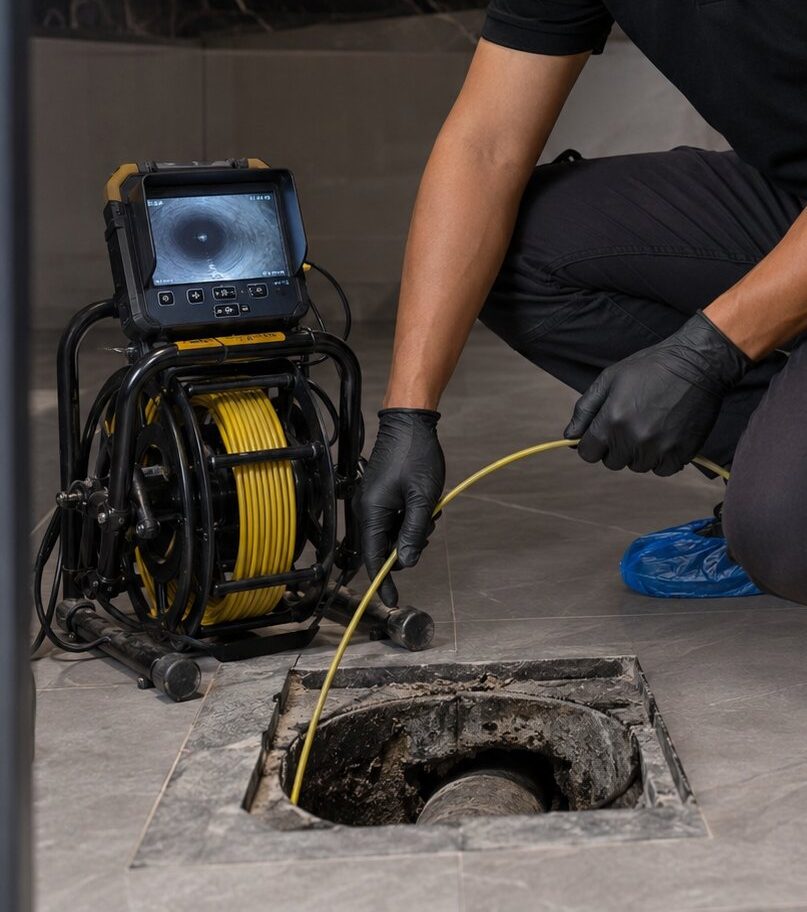
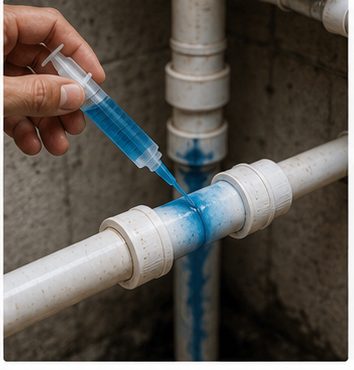
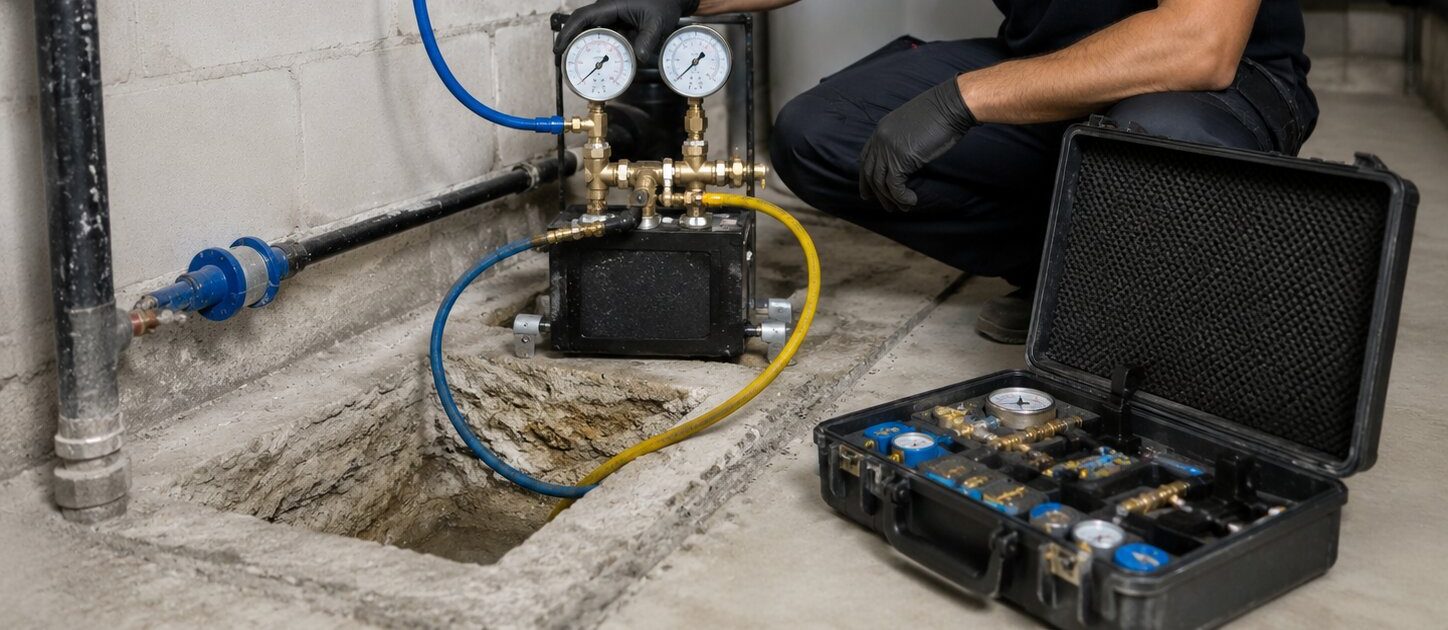
Some leaks cannot be confirmed by thermal and acoustic methods alone. Pressure testing, dye testing and robotic drain cameras give certainty on drainage and pressurised systems. We recommend these only when the first stage does not fully confirm the source, and they are quoted separately so you are never charged for testing you do not need.
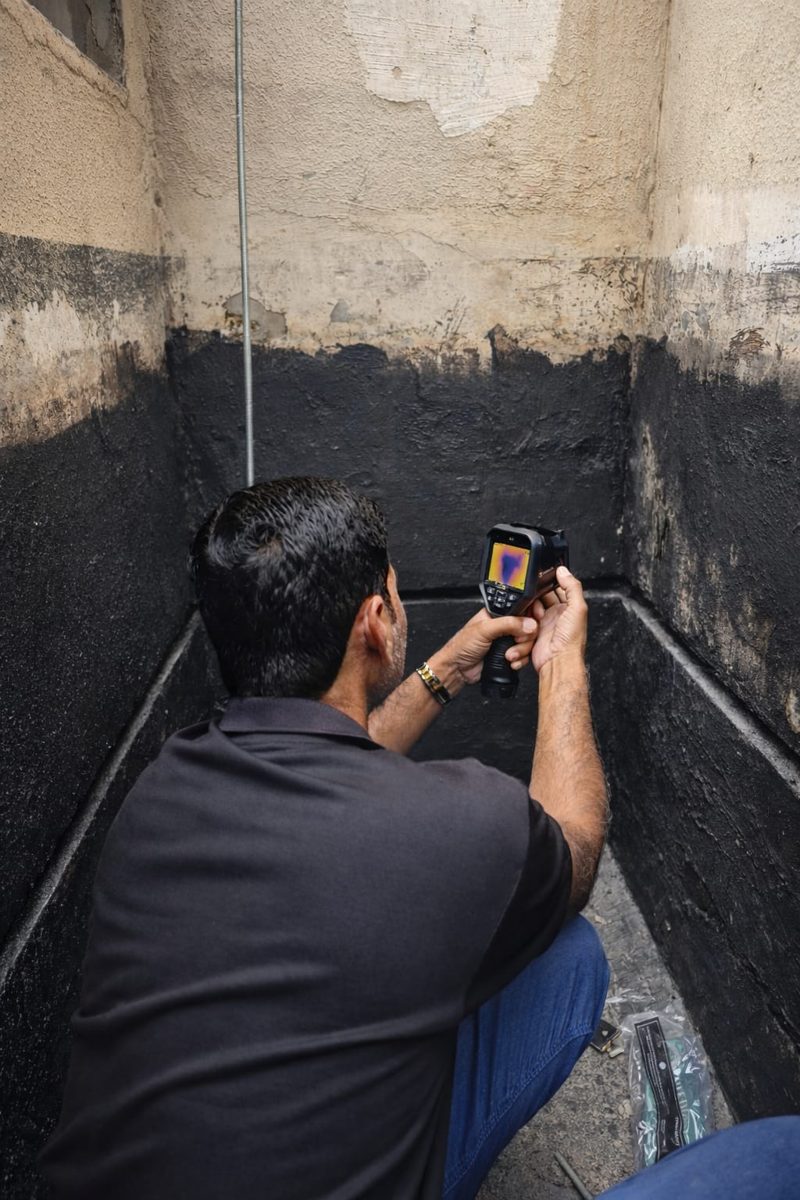
We read temperature differences across surfaces to reveal moisture behind tiles, walls and slabs.
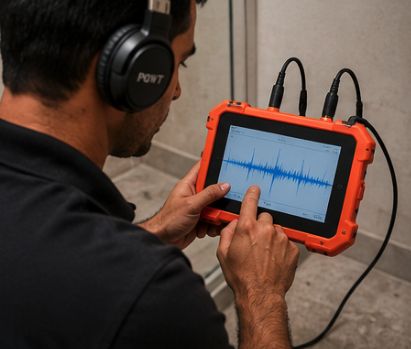
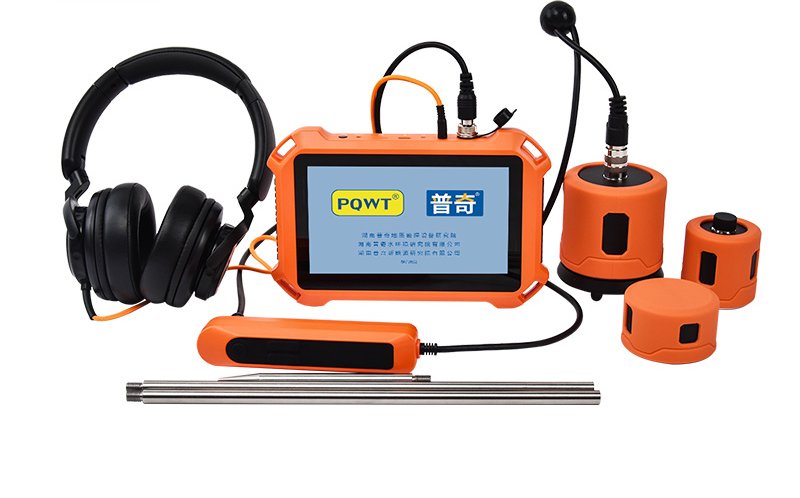
We listen for pressurised water escaping from concealed pipework to pinpoint the break.
Calibrated meters quantify how far the water has travelled into finishes and structure.
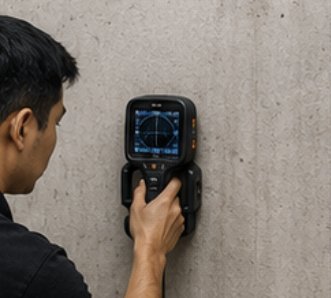
We locate concealed pipe routes before recommending any opening.
Tracing for buried lines, pool shells and podium slabs.
Where the source is waste or drainage rather than supply.
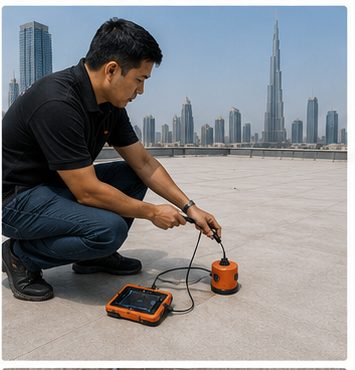
We confirm the fee and scope before we attend. The inspection fee is deducted from the works if you proceed.
Book an inspectionNo two leaks read the same, and a blind test wastes time and money. We diagnose first, then bring the right method to the right site the first time. Non invasive by default, with no unnecessary breaking of surfaces.

Reads temperature variation behind walls, floors and ceilings to map hidden moisture without touching the surface.

High sensitivity listening equipment isolates the sound of pressurised water escaping through walls, slabs and pipe networks.

Non invasive scanning locates concealed pipe routes, voids and anomalies behind finished surfaces before anything is opened.

A flexible camera fed into the pipe network confirms cracks, joint separation and blockage points from the inside.

Tracer dye introduced at selected drainage points confirms hydraulic connection and proves the leakage pathway.

Controlled pressurisation of hot and cold supply lines. A stable gauge rules a system out. A drop confirms an active leak.
A licensed engineer walks the affected area and the surrounding zones, recording symptoms, moisture patterns, pipe routing and access before any equipment comes out.
From the site read we select the method, or combination, best suited to the surface, the suspected source and the access. The method fits the site. The site never bends to the method.
We run the selected method, confirm the source and document every reading. Where a first method narrows without confirming, we escalate to a second until the source is proven, not assumed.
Every reading in your report comes off a calibrated instrument operated by our own team, not a rented camera in untrained hands. Six methods, all run in house.

Water travels along the path of least resistance and surfaces far from its source. We trace it back across every part of the building envelope and its services.
Flat roofs, terraces and podium decks, the most common entry point for ingress into ceilings below.
Concealed leaks behind tiles, under shower trays and around sanitary connections and floor drains.
Hidden moisture behind plaster, paint blistering and damp patches traced back to the source.
Supply and drainage pipes under concrete slabs, located without breaking the floor.
Condensate blockages, chilled water pipe sweating and FCU drain failures causing ceiling damage.
Penetration through expansion joints, window frames and failed facade sealant lines.
Pipe runs inside walls, columns and vertical service shafts inspected with flexible camera systems.
Shell cracks, return line failures and fitting leaks identified without fully draining the pool.
Find shell, fitting and buried line leaks without draining the pool.
Trace pipes leaking under a concrete floor before the slab is opened.
Fast response for an active, spreading leak, source confirmed the same visit where possible.
Book a professional leak investigation in Dubai. Thermal, acoustic and moisture mapping, with a signed report you can act on.