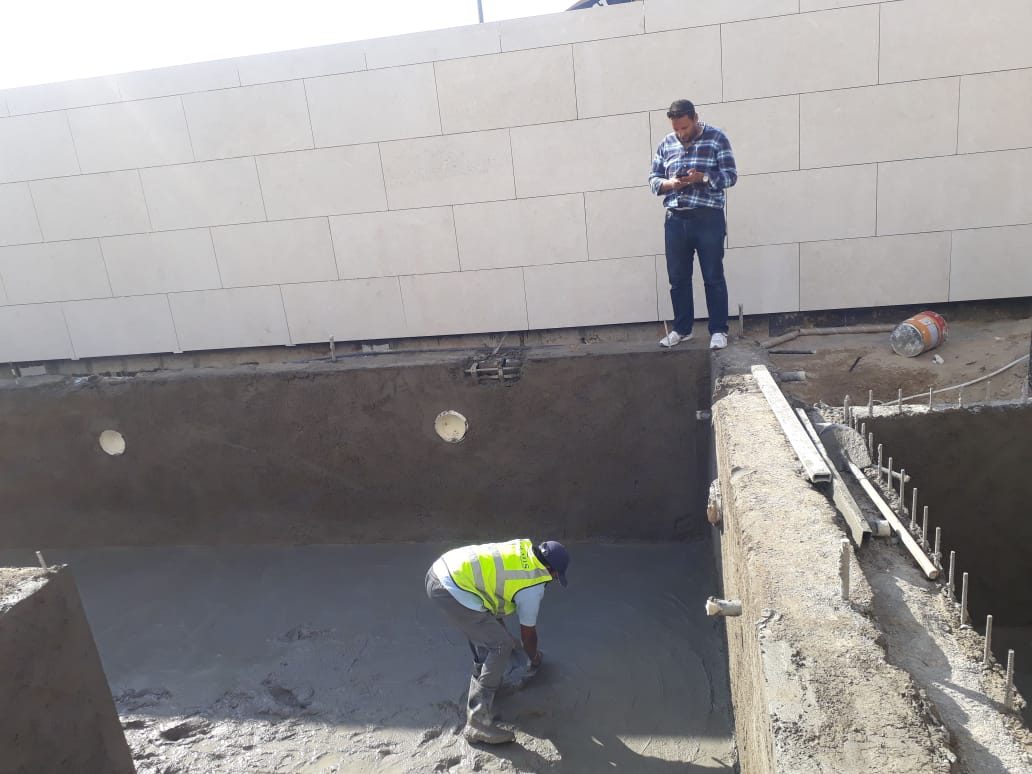
Cementitious waterproofing is a polymer modified cement coating that bonds to concrete and blockwork to form a seamless waterproof layer. It is the standard system for wet areas, water tanks and surfaces that will be tiled, because it breathes, bonds to damp substrates and takes tile adhesive directly. In Dubai it is one of the two systems we install most.
What is cementitious waterproofing?
A cementitious system is a two component product: a cement based powder and a liquid polymer. Mixed and applied in two coats by brush or trowel, it cures into a hard, slightly flexible waterproof layer, typically 2 to 3 millimetres thick. Because it is mineral based it does not degrade under alkaline conditions the way some membranes do, which is why it dominates inside concrete water tanks and under bathroom tiling.
Where cementitious waterproofing wins
We specify cementitious systems for bathroom and wet area tanking under tiles, concrete water tanks and sumps, basement retaining walls from the positive side, and balconies that will be tiled. In all these locations its bond strength and compatibility with tile adhesive beat sheet membranes, which need protection layers and are awkward to detail around drains and corners.
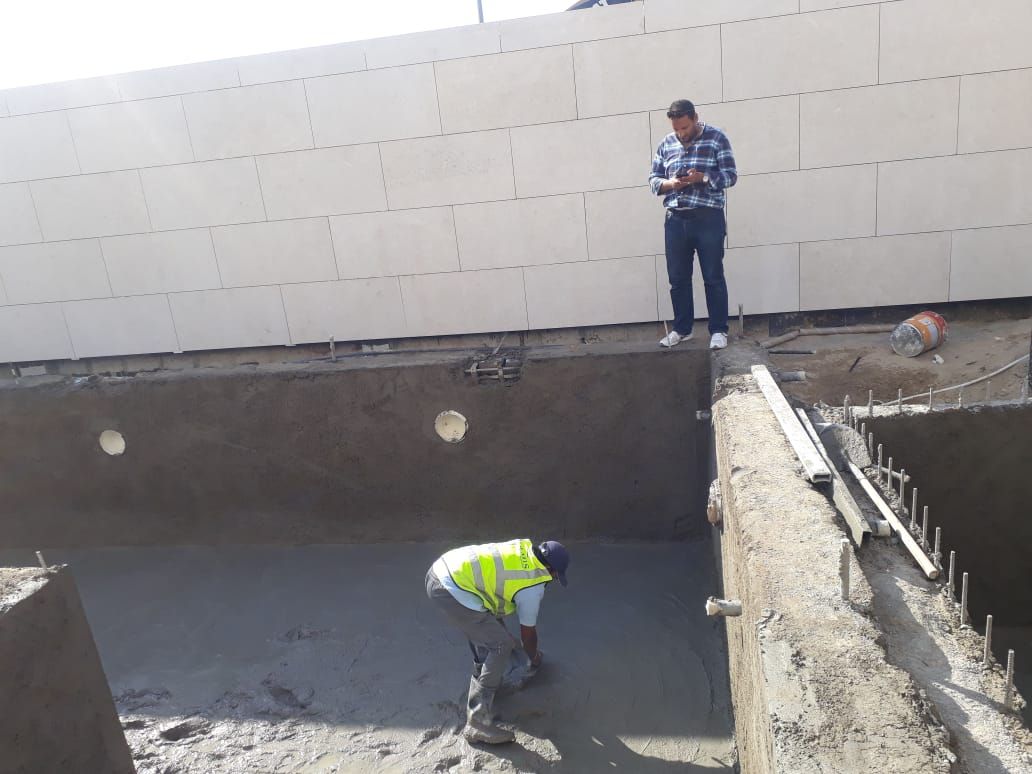
Cementitious versus membrane: which one does your roof need?
The honest answer is that an exposed roof usually wants a membrane and a tiled wet area usually wants cementitious. The table below is the comparison we walk clients through on site.
| Cementitious coating | Bituminous or PU membrane | |
|---|---|---|
| Best locations | Bathrooms, tanks, tiled areas, basements | Exposed roofs, podiums, terraces |
| UV exposure | Needs protection or tiling over | Mineral finished and PU systems handle UV |
| Crack bridging | Limited, hairline only | Good, especially PU and SBS membranes |
| Application | Brush or trowel, two coats | Torch applied rolls or cold applied liquid |
| Tiling over | Direct, excellent bond | Needs screed protection first |
| Typical life in Dubai | 10 to 15 years protected | 10 to 20 years depending on system |
Why cementitious systems fail, and how we prevent it
Nearly every failed cementitious job we investigate failed for one of three reasons: the substrate was not prepared, the coating was applied in one thick coat instead of two thin ones, or moving cracks were coated over instead of being treated first. Our process grinds and cleans the substrate, treats cracks and corners with fillets and mesh, applies two measured coats, and then flood tests the area before anything is tiled. That final test is the difference between a seal assumed to work and a seal verified to work, and it is why the work carries the Watertight Warranty.
What it costs and how to get it priced
Pricing depends on area, substrate condition and access, so treat any per metre rate quoted over the phone with caution. We inspect first, confirm the scope in writing, and the inspection fee is deducted from the works if you proceed. For a tiled bathroom in a Dubai apartment the full cycle, strip out, tanking, flood test and retiling, is usually completed within a week.