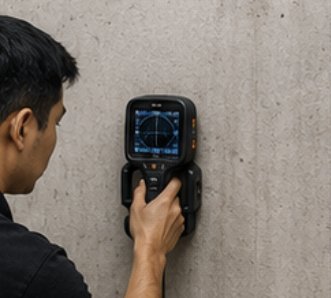
To find a water leak in a wall, read the pattern first, then trace the source with thermal imaging, a wall scanner and a moisture meter, because the damp patch is almost never where the water is actually entering. Breaking open the wall at the stain is the most common and most expensive mistake.
Read the leak before you open anything
A wall that is wet constantly, regardless of water use, points to a pressurised supply pipe. A wall that gets damp after someone showers points to a failed wet area on the other side. Damp low down on a ground floor or basement wall points to rising or lateral ground moisture. Damp that follows rain points to an external detail, a parapet or a window. The timing tells you where to look before any instrument comes out.
How the source is traced without breaking the wall
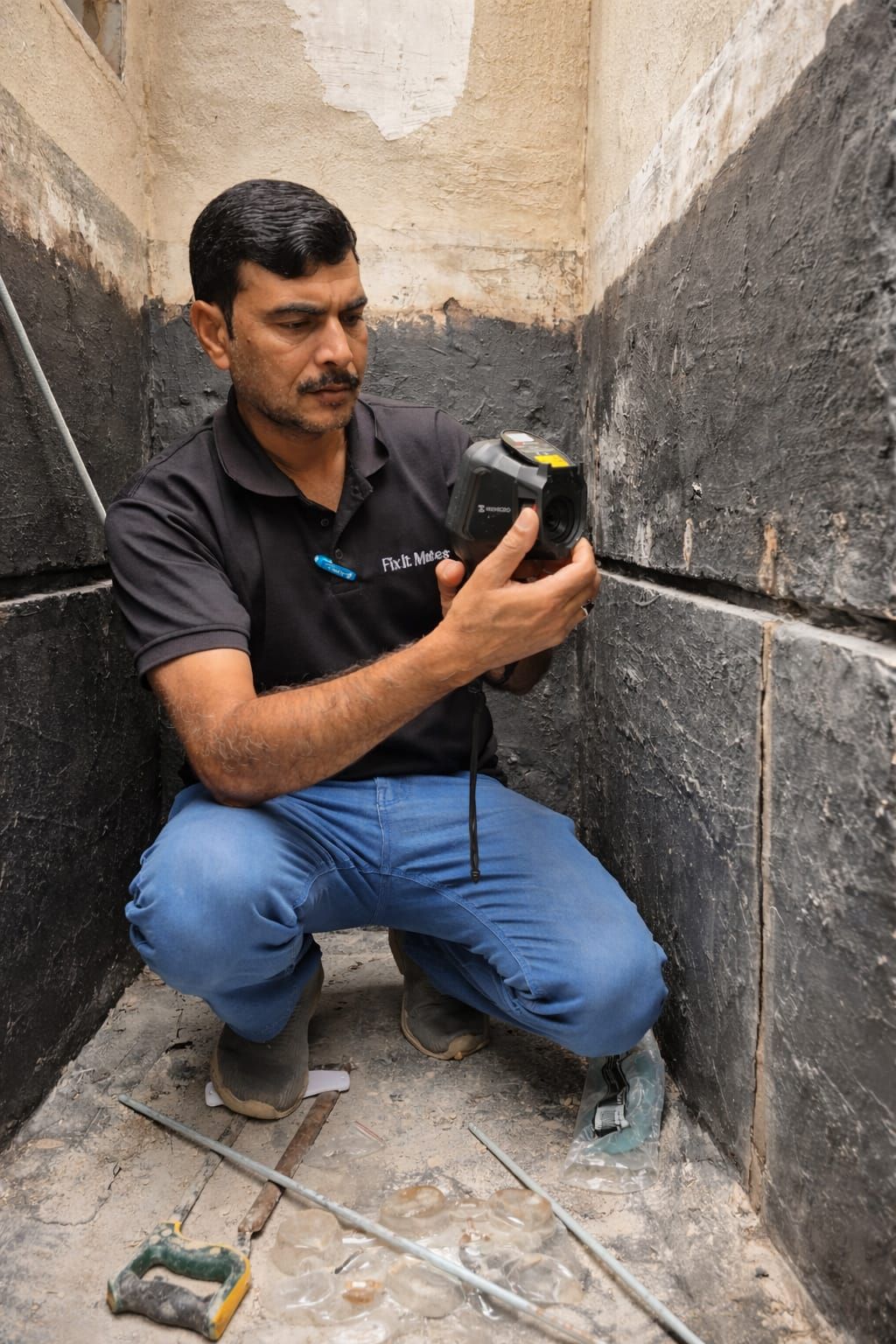
Thermal imaging maps the temperature of the moisture inside the wall and shows how far it has spread. A wall scanner traces the concealed pipe routes so you know what actually runs behind the stain. A calibrated moisture meter quantifies the wetness and its gradient, which points back toward the source. Where a pipe is suspected, a pressure test confirms which line is losing water. Only then is the wall opened, at the confirmed point.
Fixing it properly, not repainting it
Paint, including waterproof paint, does not stop water arriving from behind. It bubbles off and the salts blow the plaster. The real fix depends on the cause: repair the pipe at the confirmed point, tank the failed wet area next door, seal the external detail, or treat the damp from the correct side. Only when the source is dead do you dry the wall, treat the salts and restore the finish.
Why not just guess and open it
Water tracks along the wall and drops at the lowest convenient point, so the stain can be a metre or more from the entry. Opening the wall at the damp usually misses the source and means opening it again. Tracing first keeps one opening instead of three, which is cheaper than the guess even before the second attempt.