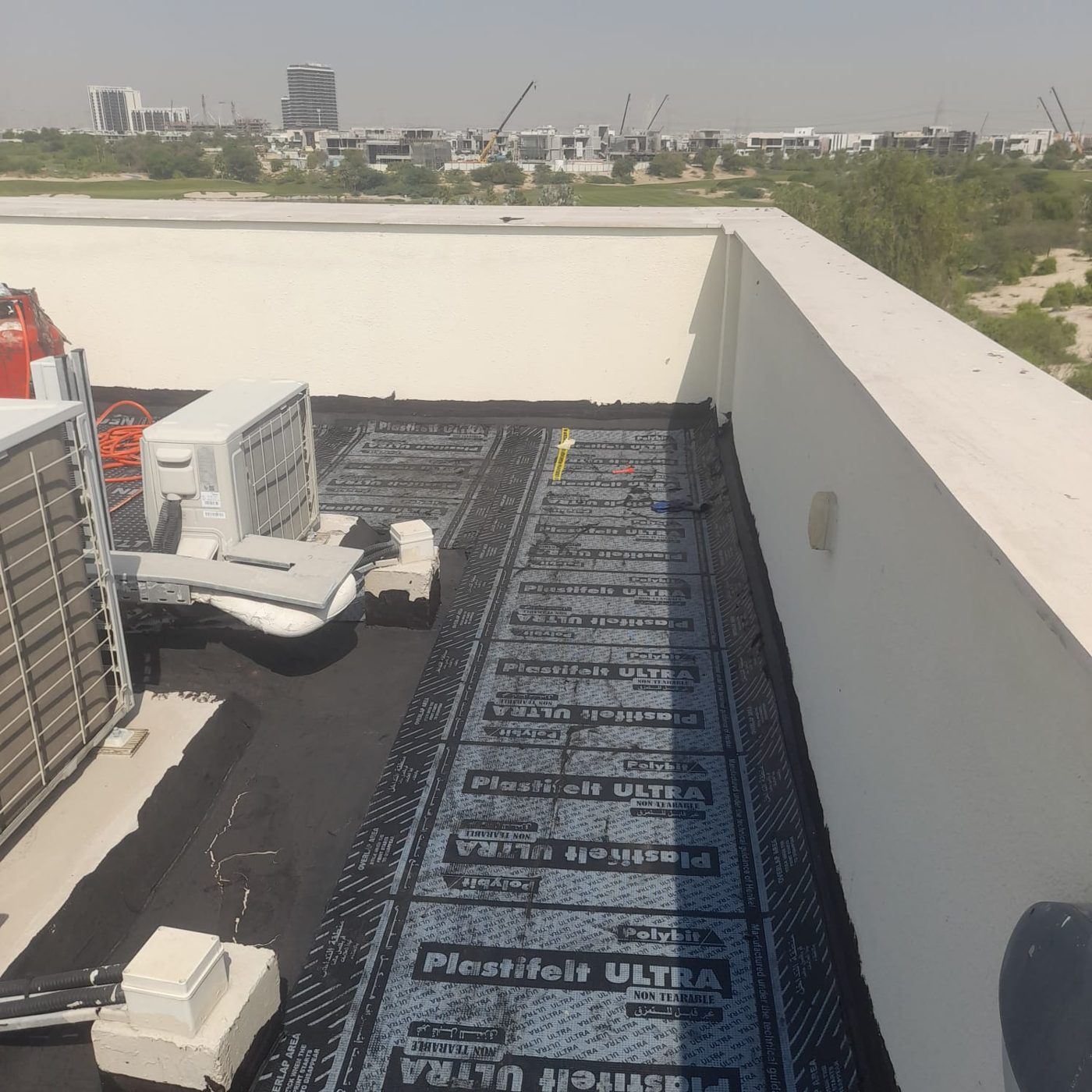
Wall seepage is moisture migrating through a wall from a hidden source, showing up as damp patches, bubbling paint, salt staining or a musty smell. The stain is almost never at the source. Fixing the wall without finding the source is repainting a symptom, and the patch returns within weeks.
What causes wall seepage in Dubai homes
Five causes account for nearly every case we investigate. A concealed pipe leak inside or behind the wall, either supply or drainage. A failed wet area next door, where a bathroom without working tanking feeds the shared wall. External water finding a path through parapets, window details or cracked render. Rising or lateral damp in ground floor and basement walls where the damp proofing has failed. And condensation from AC ducting or poorly insulated chilled water lines sweating inside the wall cavity.
How we find the source without breaking your wall
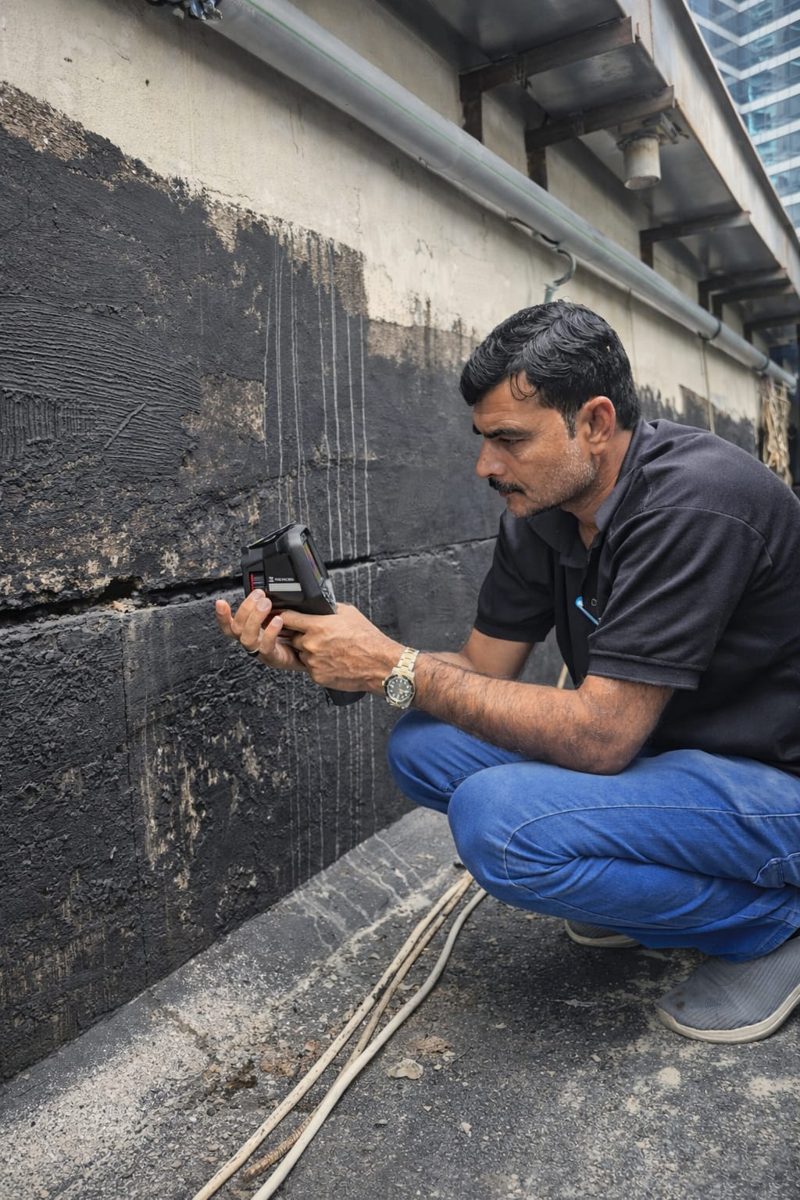
Thermal imaging reads the temperature signature of moisture inside the wall and maps how far it has spread. A wall scanner traces the concealed pipe routes so we know what runs behind the stain. Calibrated moisture meters quantify the wetness and its gradient, which points back to the source. Where pipes are suspect, pressure testing isolates which line is losing water, and dye testing confirms drainage paths. The investigation ends in a signed report with the confirmed source, the thermal evidence and a staged rectification plan.
Fixing seepage properly
The fix follows the cause. A leaking pipe is repaired at the confirmed point, opened precisely rather than chasing the whole wall. A failed bathroom next to the wall gets proper tanking, not another coat of paint on the symptom side. External ingress gets sealing at the actual entry detail. Basement seepage gets either positive side waterproofing, or injection grouting from inside where excavation is not possible. Only after the source is dead do we dry the wall, treat the salts, and restore plaster and paint, which is the Rectify half of our work.
Why repainting fails
Paint, including so called waterproof paint, does not stop water arriving from behind. Moisture keeps migrating, pushes the new paint off, and carries dissolved salts that crystallise and blow the plaster. Every month of delay also widens the damage, because water travels along the wall and into floors. The cheap fix is the expensive fix, delayed.