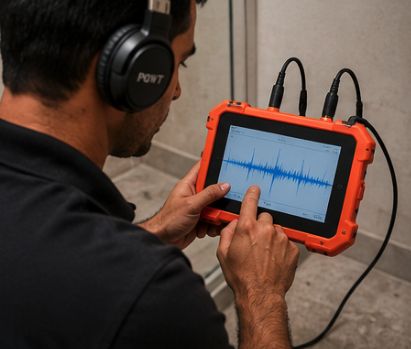
Professional leak detection finds the true source of a hidden water leak using thermal imaging, acoustic listening and moisture mapping, rather than a handheld gadget, because the source is usually metres from where the damp shows. The small water leak detectors sold online have their place, but they are not how a concealed leak in a wall, slab or roof is actually found.
Do home water leak detectors work?
The cheap water leak detector you can buy is a spot alarm. It sits on a floor or by a pipe and sounds when it gets wet. That is useful as an early warning under a sink or a water heater, and worth having. What it cannot do is tell you where a leak inside a wall or under a slab is coming from, because it only knows about water that has already reached it. Finding a concealed source needs instruments that read through the structure.
The three methods that actually find the source
Thermal imaging reads temperature differences across a surface. Water changes how heat moves, so a thermal camera maps the wet path behind tiles, walls and slabs without touching them. Acoustic detection uses sensitive listening equipment to hear pressurised water escaping from a pipe and walk the sound back to the break. Moisture mapping uses calibrated meters to quantify how wet an area is and which way the moisture increases, which points back toward the source. Used together, they locate the source before anything is opened.
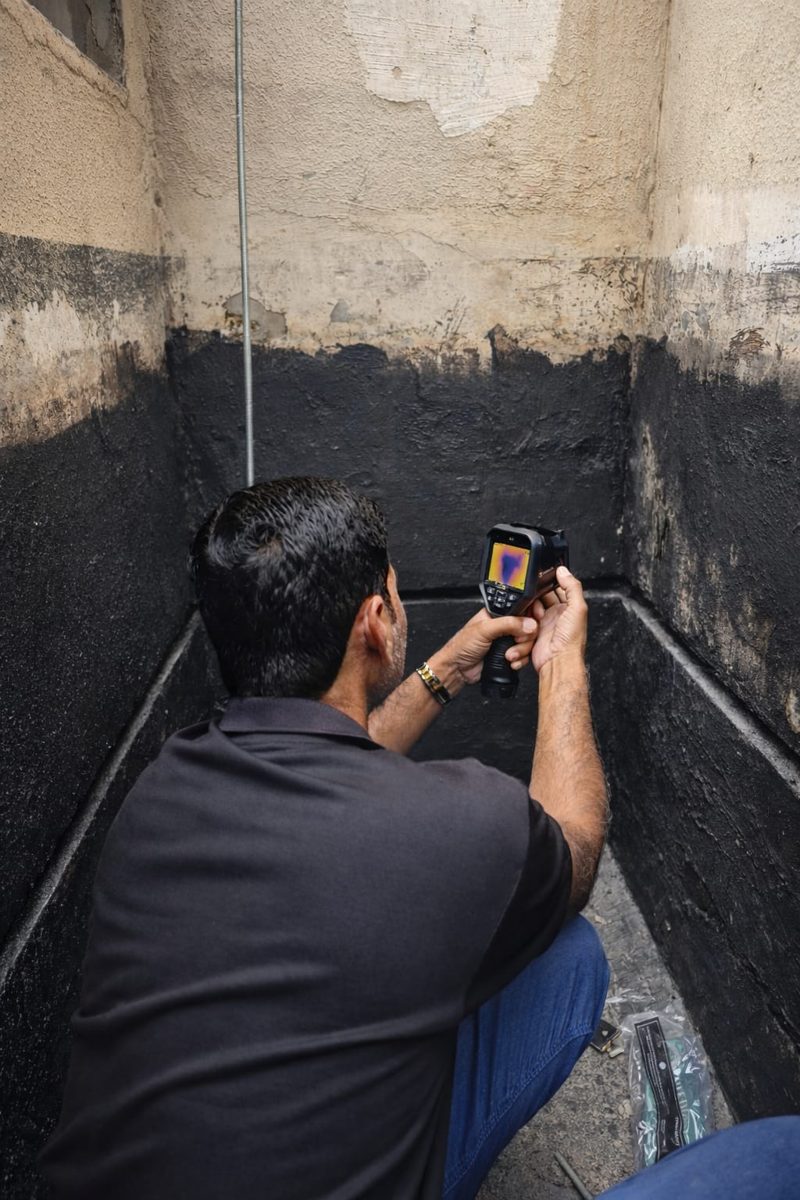
When further testing is added
Some leaks need more than the core three. Pressure testing isolates a supply line and confirms an active loss. Dye testing traces a drainage path. A robotic drain camera confirms cracks and joint failures inside a pipe. These are added only when the first stage does not fully confirm the source, so you are never charged for testing you do not need.
Why the gadget is not enough for a real leak
A plumber with a borrowed thermal camera and no method produces a guess. Professional detection is a sequence: read the site, pick the right method, confirm the source, and document every reading. It ends in a signed report with the confirmed source, the evidence and a rectification proposal, which is the thing a handheld detector can never give you and the thing a building, landlord or insurer will actually accept.