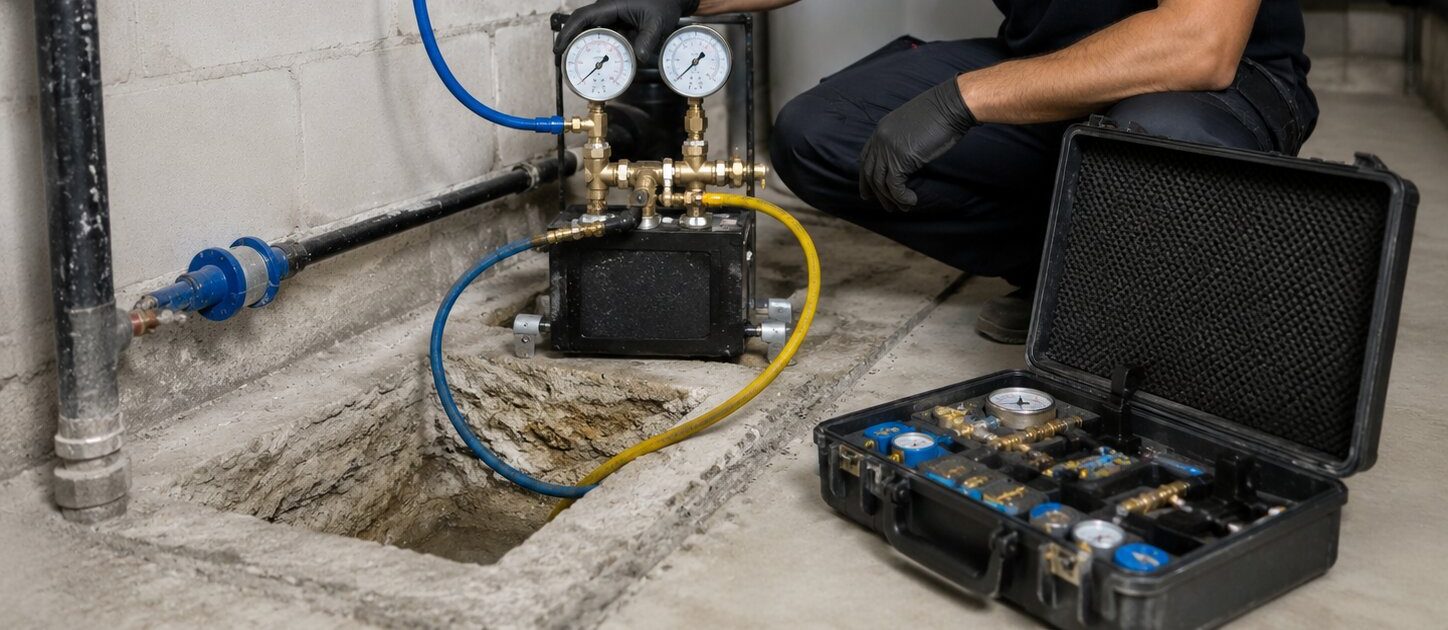
A leaking pipe shows up as damp, a drop in water pressure, the sound of running water with the taps closed, or a water bill that climbed for no reason, and the fix starts with confirming which line is failing and where, not opening the nearest wall.
The signs of a leaking pipe
Damp patches on a wall, floor or ceiling that do not dry out. A warm patch on the floor, which points to a hot water line. A weak flow at the taps, which can mean water is escaping before it reaches them. The sound of water running when everything is switched off. And a water bill that jumped without a change in use. Any one of these justifies a proper check before anyone breaks into a wall.
Supply pipe or drainage pipe
The two behave differently, so they are found differently. A supply pipe is under pressure, so a pressure test will show a drop and acoustic listening will hear the escape. A drainage pipe is not under pressure, so it is confirmed by dye testing and a drain camera instead. Telling which type you have is the first step, because it decides the method.
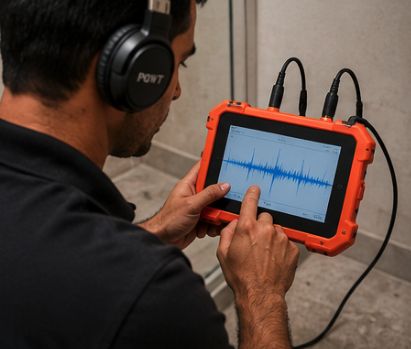
How the leak is pinpointed
We isolate the plumbing and pressure test the supply lines to confirm an active loss and which line is failing. Acoustic equipment then walks the sound of the escaping water back to the break. If the line runs under a slab, thermal imaging maps a hot water leak spreading under the floor. The point is marked before anything is opened, so the repair is precise.
Repairing it once
With the point confirmed, the pipe is opened at that spot, repaired or rerouted, and the finish reinstated. Because we also waterproof and restore, a pipe leak that damaged a wall or ceiling can be taken through to a dry, finished result under one accountable party, rather than leaving you to chase separate trades.